www.bcn.cat/cultura

Scheduled completion of work
abril - mayo 2011

district
sants - montjüic
address
amnistia internacional, 8-14
DATE OF CONSTRUCTION
1959
OWNERSHIP
municipal
EXISTING SPACE
Floor plan: 600 m2 (rectángulo de 20 × 30 m)
Free height: 8,50 m
ACCESSIBILITY. PUBLIC TRANSPORT
fgc: ildefons cerdà
buses: 9, 13, 37, 72, 79, 109 and 125
ARTISTIC USES
Dance and movement arts
promoted by
Barcelona City Council,
Asociación de Profesionales de la Danza
de Cataluña (APDC) and Asociación de Compañías Profesionales
de danza de catalunya (acpdc)

history

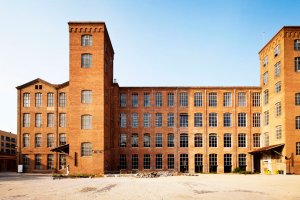
The Illa Philips Granary stands in the old Philips industrial complex, in the Marina district. It was a major part of the Philips light and light bulb factory, situated next to Passeig de la Zona Franca. It was its shape that led to its being nicknamed the "granary", even though the space was built and in operation for years as a light bulb drying plant The Dutch multinational closed down the factory in 2004.

Programme

The centre seeks to meet the needs of dance professionals, being a space that includes a movement arts development project, where access and participation are key elements.

The principal core that is to be developed for the future centre is that of research and interdisciplinary creation. In addition, Illa Philips aims to stand out as a neighbourhood cultural centre connected to the Catalan, Spanish and international scene. Open to a wide range of publics, the space will be able to stage public presentations of projects and will also cover the need to open up dialogues and spaces of participation.

Plano

Scheduled completion of work

April - May 2011

ARCHITECTS OF THE REFURBISHMENT

Maite Hernando and Sara Galmán

ARCHITECTURAL PROJECT

The kiln of the old Philips glass factory is a hall that has approximate floor plan measurements of 20 x 30 m, situated one metre above the elevation of Carrer de Jane Addams. The height of the hall is a free 9 m up to the metal structure of the framework that forms the roof, which extends to a further 10 m in the interior space left by this structure.

The action in the building divides the premises in half cross-wise to leave a large hall, the sound stage studio measuring 343 m2, with all the free height of the premises. The other half is divided horizontally with an intermediate ironwork: the lower part houses the centre's offices and service spaces, while in the upper part two dance halls of over 120 m2 each are created, with a free height of 5 m.

Access to the new facilities has been created on Carrer de Jane Addams. A large opening has been made in the building, as it had never had one previously, so creating a representative and impacting facade that reinforces the building's image as a unique facility devoted to artistic creation. A concrete podium has been created in front of this opening, which has the dual role of overcoming the incline of the ground floor from the street to assist access for users of the building, with reduced mobility or otherwise, and also allowing technical and stage material to be brought in.

The action in the building, both the interior and the exterior, prioritises the functional aspects with a contemporary language, and at the same time respects and highlights its heritage nature as it is one of the few buildings representing the industrial rationalist architecture of the 1950s in Barcelona.